


Medical self-advocacy in retirement means making sure the care plan for your body fits the plan for your life. It includes asking better questions, understanding your options, reviewing costs before they become surprises, and giving trusted people the information they need to help when decisions get stressful. This article covers appointment preparation, healthcare costs, important documents, medical bills, appeals, and family coordination.
Key Takeaways
Medical self-advocacy is less about being pushy and more about making care easier to understand, follow, and afford.
Start each appointment with the outcome you care about most.
Ask for next steps in writing so you and your helpers have a shared reference.
Care setting, medication choices, referrals, and timing can affect out-of-pocket costs.
A medical power of attorney, advance directive, HIPAA release, and one-page health summary can reduce confusion.
Coordinating healthcare decisions with cash flow, insurance, tax timing, and long-term care planning can help preserve flexibility.
What Does Medical Self-Advocacy Mean In Retirement?
Medical self-advocacy means communicating what matters to you, asking for plain-language explanations, and making sure your care plan reflects your values and daily life.
In retirement, healthcare choices often carry both personal and financial weight. A treatment may affect your mobility, ability to remain at home, spouse’s caregiving role, or monthly cash flow. When clinicians understand those priorities, the conversation becomes more useful.
You do not need medical training. A simple sentence can reset the visit: “My goal is to stay safely at home and keep walking every day. What options support that?” From there, ask what benefits and side effects are most likely, whether there are lower-cost settings that still meet the clinical need, and when to call back.
Before you leave, ask for the plan in writing. A written after-visit summary can help prevent missed instructions, duplicate calls, unnecessary appointments, and confusion among family members.
How Do Healthcare Decisions Affect Retirement Cash Flow?
Healthcare decisions can influence retirement cash flow through deductibles, coinsurance, network rules, medication tiers, and where care is delivered.
The same imaging, infusion, or procedure may have different costs depending on whether it occurs in a hospital outpatient department, freestanding center, or another approved setting. CMS hospital price transparency rules require hospitals to post standard charge information and a consumer-friendly display for many shoppable services, which can support better cost conversations before elective care.
Use the table below to spot decisions that may deserve one more question before you schedule, sign, or pay.
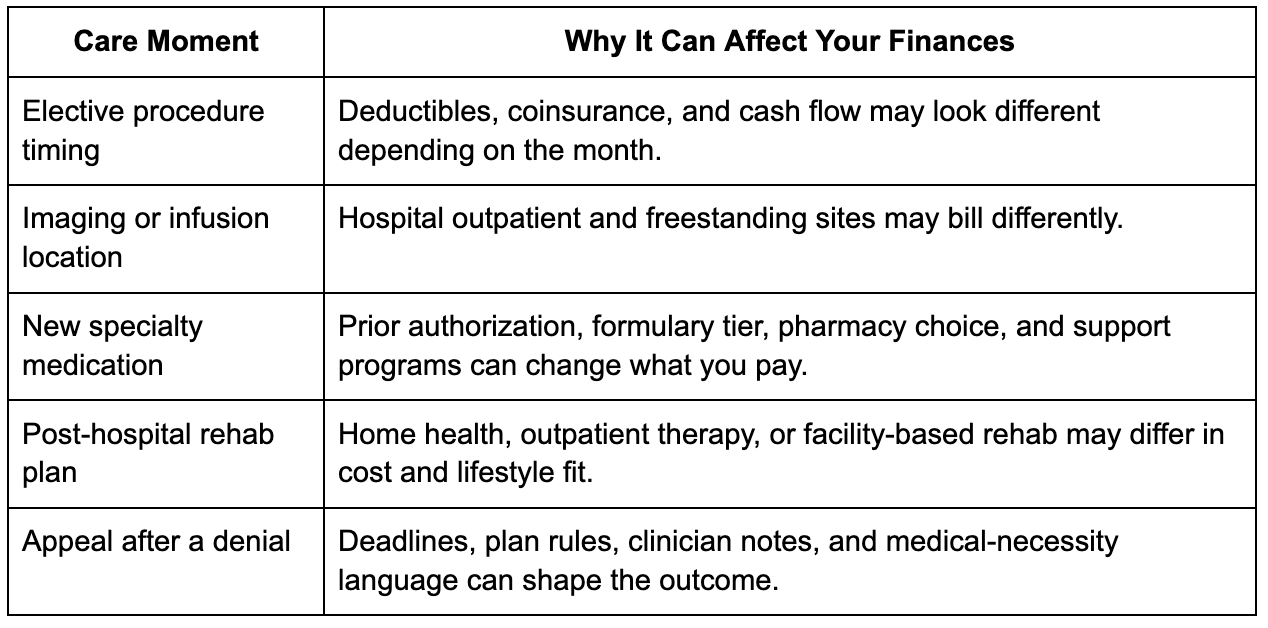
The point is not to avoid care. The point is to plan care with the same attention you would bring to any important retirement decision: what is needed, where it should happen, what it may cost, and who should help evaluate the next step.
Which Documents Help Your Loved Ones Advocate For You?
The most useful healthcare documents name who can speak for you, explain what you want, and make your medical information easier to access.
Start with a medical power of attorney and an advance directive. Rules and names vary by state, so prepare them with appropriate legal guidance. Once completed, store them where family can find them, upload them to major patient portals, and bring copies to hospital admissions.
It also helps to keep a one-page health snapshot with diagnoses, allergies, medications with doses, clinician contacts, insurance details, emergency contacts, and healthcare decision-makers. This can reduce guesswork when loved ones may already be worried or making decisions quickly.
How Should Retirees Review Medical Bills And Insurance Notices?
Review medical bills by comparing the provider bill with the insurance notice, asking for an itemized bill, and questioning anything that does not match.
For Original Medicare, a Medicare Summary Notice explains what providers billed, what Medicare paid, and the maximum amount you may owe. Medicare Advantage, Part D, and other plans may use an Explanation of Benefits or similar notice; Medicare recommends reviewing these documents and contacting the plan about mistakes or questions.
A simple bill-review process can help:
Compare the provider bill to the Medicare notice or EOB.
Ask for an itemized bill if the balance is unclear.
Confirm network status and billing codes if something looks wrong.
Keep a log of dates, names, reference numbers, and promised follow-up.
Ask whether a payment plan, prompt-pay discount, or financial assistance program is available.
These steps can reduce overpayment and give you more confidence about what is actually owed.
What Should You Do If Coverage Is Denied?
If coverage is denied, act quickly, save the notice, follow the plan’s instructions, and ask your clinician for supporting documentation.
Medicare states that people can appeal if Medicare or a plan refuses to cover a service, supply, item, or drug they believe should be covered; for Medicare Advantage and drug plans, the plan must provide appeal instructions in writing.
A focused appeal file is usually better than a large, disorganized one. Keep the denial letter, relevant dates, plan rule if available, clinician notes, and a short letter of medical necessity. If services are ending after a hospital stay or in a care setting, pay close attention to fast-appeal deadlines.
How Can Medical Advocacy Support A Broader Retirement Plan?
Medical advocacy supports retirement planning by connecting care choices with income, taxes, insurance, and long-term needs.
A major health event may affect withdrawal timing, cash reserves, long-term care planning, or family access to information. A new recurring medication may change monthly cash flow. A long-term care insurance claim may require precise documentation about activities of daily living or cognitive changes.
When health and financial decisions are viewed together, it becomes easier to protect choice, reduce avoidable surprises, and make sure medical decisions do not unintentionally strain the rest of your retirement plan.
Frequently Asked Questions About Medical Self-Advocacy In Retirement
Is self-advocacy appropriate if my doctor seems rushed?
Yes. Start with your top goal and one clear question. A focused request can make the visit more efficient and help your clinician tailor the plan.
Will asking for a second opinion harm the relationship?
It should not. Second opinions are common for high-stakes, complex, or irreversible decisions. Framing it as a desire to confirm direction keeps the conversation respectful.
What is the difference between a medical power of attorney and an advance directive?
A medical power of attorney names who can speak for you if you cannot. An advance directive gives that person and your care team guidance about your preferences.
How can I lower medication costs without compromising care?
Ask about therapeutic alternatives, preferred pharmacies, 90-day fills, formulary tiers, prior authorization steps, and support programs for specialty medications.
Who should help me keep track of medical decisions?
Choose someone calm, organized, and willing to ask questions. Give that person the right documents, contact lists, and permission to participate when needed.
Align Care, Costs, And Confidence In Retirement
Medical self-advocacy is a practical way to protect your health, your family, and your financial life at the same time. It helps turn stressful decisions into clearer conversations about your goals, options, costs, and trusted helpers.
If you want to think through how medical costs and planning documents fit into your broader retirement strategy, contact Totus Wealth Management to schedule a meeting and start looking at the full picture with more clarity.